
SaaS SEO wins when three systems run together: technical reliability, intent-mapped content built around product use, and link equity earned through integrations and partners. Skip any one pillar and organic signups stall even when traffic looks healthy. Teams that run this playbook correctly typically see organic-to-PQL conversion climb within a quarter, with pipeline compounding as comparison and integration pages mature. The rest of this piece breaks down the framework, the page types that convert, the technical guardrails, and a 90-day roadmap to execute it.
TL;DR:
- Technical discoverability must be optimized first, including comprehensive audits, canonical setup, and schema markup, before building high-intent content pages.
- Comparison, integration, and use-case pages that match the buyer’s evaluation stage outperform generic blog posts in converting organic traffic into pipeline.
- Building integration pages and partnerships through direct outreach and marketplace listings significantly boosts relevant traffic and link equity.
- SEO success depends on measuring organic-to-PQL conversion, assisted pipeline, and revenue impact, not just rankings or sessions.
- A structured 90-day plan emphasizes fixing technical issues upfront, launching targeted content, activating partners, and refining based on early pipeline signals.
MonstrousmediagroupBuild SEO Systems That Drive RevenueMonstrous Media Group builds SEO, SEM, and web systems designed to generate, capture, and close more revenue without busywork.Explore Monstrous Media Group
Table of Contents
- What Is SEO for SaaS, and How Is It Different?
- Which Content and Page Types Actually Drive Pipeline?
- What Technical Foundations Matter Most for SaaS Sites?
- How Do You Build Links Through Partners and Integrations?
- How Do You Measure SEO’s Impact on Pipeline?
- What Does a 90-Day SaaS SEO Roadmap Look Like?
- How Monstrous Media Group Operationalizes This Playbook
- How Should SaaS Teams Use Reviews and User-Generated Content?
- What SEO Problems Are Unique to Multi-Tenant SaaS Platforms?
- Operator Perspective: What Actually Breaks SaaS SEO Programs
- Ready to Turn This Playbook Into a Working System?
- Sources
- FAQ
What Is SEO for SaaS, and How Is It Different?
SEO for SaaS is not blog volume aimed at generic keywords. It’s a system for ranking pages that map directly to how a buyer evaluates, trials, and adopts software, and it succeeds or fails on conversion-to-use, not raw sessions.
A SaaS marketing site sells a repeatable outcome to a buyer who compares three or four vendors before ever talking to sales. That buyer searches “[Product] vs [Competitor],” “[Category] alternatives,” and “[Tool] integration with [Platform]” long before they search your brand name. Traffic that doesn’t match one of those intents rarely turns into a product-qualified lead. This is the core distinction from ecommerce or local SEO, where volume and rankings alone often carry commercial value. In a b2b saas seo strategy, a thousand visits to a mid-funnel listicle mean less than fifty visits to a comparison page that a buyer reads two days before signing a contract.
A workable saas seo strategy rests on three pillars, and the sequencing matters:
- Technical discoverability. Search engines and AI crawlers need to reliably index, render, and understand every page, including gated app documentation and dynamic pricing tables.
- Intent-led content engine. Pages built around comparison, use case, and integration intent, not generic educational posts that never touch the product.
- Link equity from partners and integrations. Backlinks earned through ecosystem relationships, not outreach campaigns chasing unrelated guest posts.
Semrush’s SaaS SEO framework frames this same three-pillar approach as the practical order of operations: fix the foundation, then build content aligned to the funnel, then layer in link and partner work. Skipping ahead to content before technical discoverability is solid is the single most common reason SaaS SEO programs stall at month four.
Page types should map to where the buyer sits in their evaluation, and most SaaS sites get this mapping wrong by defaulting every new page to a top-of-funnel blog post:
| Buyer stage | Reader intent | Page type |
|---|---|---|
| Awareness | “What is [category]?” | Educational pillar page |
| Consideration | “[Product] vs [Competitor]” | Comparison page |
| Consideration | “Best [category] tools” | Alternatives / roundup page |
| Decision | “Does [Product] work with [Platform]?” | Integration page |
| Decision | “How do I [specific job]?” | Use case page |
| Trial-ready | Direct navigation, brand search | Pricing and demo page |
Ahrefs’ research on SaaS SEO backs this up directly: pages that map to bottom-of-funnel and mid-funnel intent, comparisons, alternatives, and integrations, convert at meaningfully higher rates than generic top-of-funnel posts. That doesn’t mean top-of-funnel content is worthless. It means it should exist to feed the pillar structure, not to stand alone as the growth strategy.
Which Content and Page Types Actually Drive Pipeline?
The content architecture that converts follows a pillar-and-cluster model, but most SaaS teams build the cluster and forget the linking discipline that makes it work. Every cluster page needs a link to its pillar page within the first two paragraphs, using descriptive anchor text that names the destination topic rather than “click here” or “learn more.” That early link tells both readers and crawlers what the cluster page supports, and it passes topical relevance back to the page you actually want to rank for competitive terms.
Six-page templates consistently outperform generic blog content for SaaS pipeline:
- Comparison pages (“[Your Product] vs [Competitor]”). These convert best because the reader has already decided to buy something in the category; they’re deciding who from.
- Alternatives pages (“Best [Competitor] alternatives”). These capture switch-intent traffic, often the highest-value segment because the reader is already dissatisfied with a current tool.
- Integration pages (“[Product] + [Platform] integration”). These rank for low-competition, high-intent queries and double as partner marketing assets.
- Use-case pages (“[Product] for [job function]” or “[Product] for [industry]”). These let you speak directly to a buyer persona’s actual workflow instead of generic features.
- Calculators and free tools. These attract links naturally because other sites reference them as resources, and they generate leads from people not yet ready for a demo.
- Pricing and demo pages. Often under-optimized because teams assume these pages only need to exist, not perform, in search.
Pro Tip: Audit your integration pages before writing a single new comparison post. If a competitor has forty integration pages indexed and you have four, that gap alone is likely costing you more qualified traffic than any missing blog topic.
Programmatic pages have a place here, but only for integration and use-case templates where the underlying data varies in a genuinely useful way, think “[Product] + [each of 200 platforms].” Applying a programmatic template to comparison pages usually produces thin, interchangeable content that both readers and search engines recognize as low value. Comparison pages need bespoke research: real feature tables, real pricing context, and an honest account of where a competitor actually wins. A templated comparison page that never admits a competitor’s advantage reads as marketing copy, not a buyer resource, and it converts accordingly.
Editorial promotion and partner activation solve the bootstrap problem every new content cluster faces: nobody links to a page nobody has seen. When you publish an integration page, notify the partner’s marketing team directly. Most partner programs have a co-marketing channel built for exactly this, and a partner linking to your integration page from their own directory is worth more than a dozen cold outreach links because the relevance signal is immediate and durable.
What Technical Foundations Matter Most for SaaS Sites?
Indexability problems kill more SaaS SEO programs than bad content ever does, because a page a crawler can’t reach or trust doesn’t compete regardless of how well it’s written. Run this checklist before investing further in content:
- Confirm your XML sitemap includes every canonical URL you want indexed and excludes redirected or noindexed pages.
- Audit robots.txt for accidental blocks on CSS, JS, or entire app subdirectories that render marketing pages.
- Check for noindex tags left over from staging environments, a shockingly common cause of sudden traffic drops on newly launched pages.
- Verify canonical tags point to the correct version of each page, especially on pages with tracking parameters or app-generated URL variants.
- Add schema markup, including FAQ schema on pages answering common buyer questions, since structured, citable answers improve the odds of surfacing in AI-generated responses.
That last point matters more each quarter. GEO and AEO readiness depends on clear, extractable definitions and structured data that an AI system can quote directly, not just rankings in traditional blue links.
Redirect and migration hygiene deserves its own discipline because a botched migration can erase years of ranking equity in a single deployment. A 37-item site migration SEO checklist built for exactly this situation lays out the non-negotiables: build a complete one-to-one redirect map before touching DNS, use server-side 301 or 308 redirects rather than JavaScript or meta-refresh redirects, and eliminate redirect chains where one old URL redirects to another before finally landing on the new URL. Chains dilute link equity and slow crawler discovery, and they compound quickly on large SaaS sites with years of accumulated legacy URLs.
If you’re running a domain migration seo project, keep the old domain crawlable and responding through the cutover window, not torn down the day the new domain goes live. Google’s Change of Address tool provides a 180-day window of preferential signal forwarding between properties, but it explicitly does not replace correct redirects or technical hygiene. Treat it as a supplementary signal, never a substitute for the redirect map.
A migration is also a forced quality audit. Search engines treat large-scale URL changes as a trigger to re-evaluate the entire site, which means thin or outdated pages that were previously tolerated can suddenly start dragging on the new domain’s authority. Cull dead weight before you migrate, not after rankings drop.
Core Web Vitals and CDN configuration deserve specific attention on SaaS sites because documentation subdomains and app-adjacent marketing pages often sit on different infrastructure than the main site, with inconsistent caching and render performance. Large documentation sets also introduce crawl budget concerns: if you have thousands of doc pages, make sure your internal linking and sitemap priority signals guide crawlers toward the pages that actually drive signups, not just alphabetically through your entire knowledge base.
Before any of this, snapshot your baselines: GA4 organic sessions and conversions, a full Google Search Console query and page export, a backlink profile export, Core Web Vitals scores, and screenshots of how your brand currently appears in AI-generated answers on relevant queries. Without that snapshot, you can’t prove a migration succeeded or diagnose what broke if it didn’t.
How Do You Build Links Through Partners and Integrations?
Link building for SaaS works differently than in most other categories because the product itself generates natural partnership opportunities that outreach campaigns can’t replicate. An integration with another platform is both a product feature and a link-earning asset, since the partner has a direct incentive to reference it in their own marketplace or directory.
Integration hubs and app marketplaces (think platform-specific app stores) function as some of the highest-value link sources available to a SaaS business, because the referring domain is topically relevant, the traffic is pre-qualified, and the relationship tends to be durable rather than a one-time placement. Prioritize getting listed in every marketplace tied to a real, working integration before spending budget on generic guest post outreach.
Directory and marketplace submissions serve a narrower but real purpose. Curated, relevant directory listings can accelerate discovery for a new integration page, and services like StartupSubmit’s SaaS directory submission service exist specifically to place a product across dozens of relevant SaaS directories at once. Use programmatic directory submission for breadth and early visibility, but pair it with curated, higher-effort outreach for the handful of directories and communities where your actual buyers spend time. Volume alone in low-relevance directories does little for either rankings or referral traffic.
Linkable assets built for a SaaS audience tend to fall into a few reliable categories:
- Original data studies built from anonymized product usage data, something no competitor can replicate because they don’t have your dataset.
- Free calculators or tools that solve a narrow, real problem for your buyer persona, not just a lead-gen gimmick.
- Templates relevant to the workflow your product supports, distributed with clear attribution back to your site.
- Co-marketed tutorials built jointly with an integration partner, published on both sites, which doubles distribution and signals real relevance to both audiences.
Product-led, programmatic assets like free tools consistently rank among the highest-ROI content types for SaaS specifically because they attract links passively long after launch, unlike a blog post that stops earning attention within weeks.
How Do You Measure SEO’s Impact on Pipeline?
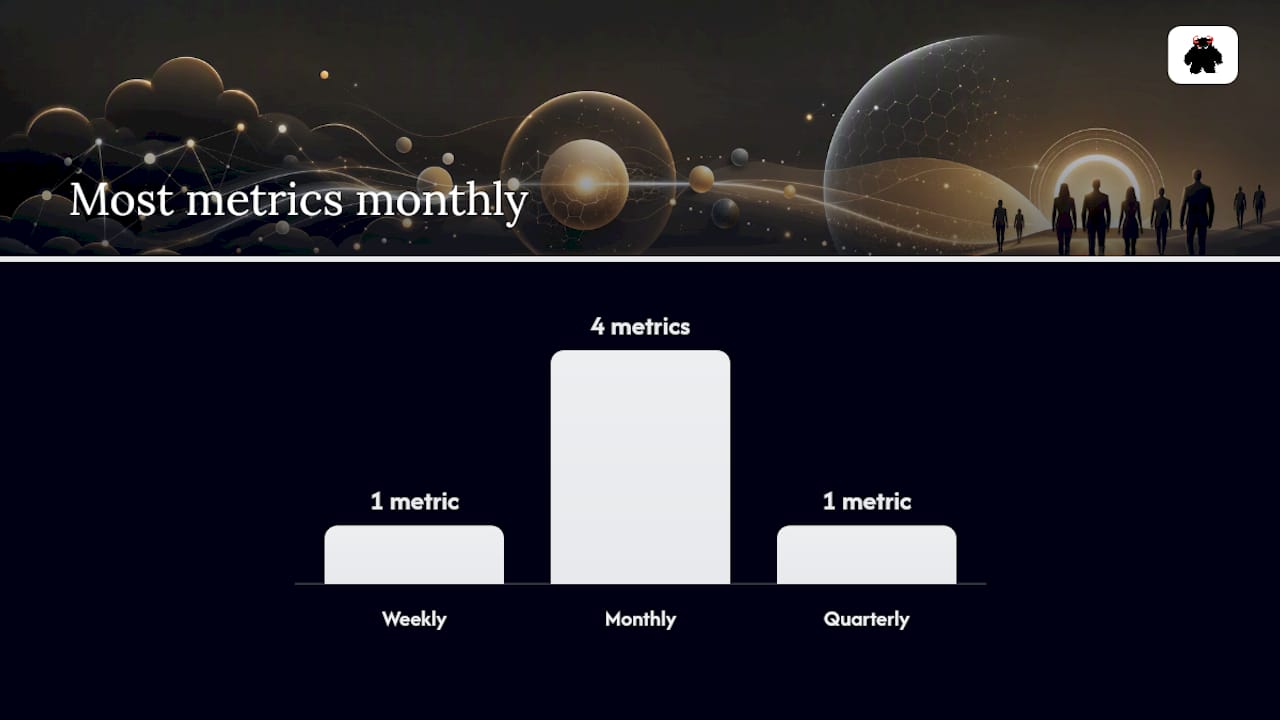
Ranking position and traffic volume tell you almost nothing about revenue impact on their own. The KPI set that actually matters connects organic visibility to product usage and closed revenue, and most SaaS teams are missing at least half of it.
Track these metrics on a recurring cadence, not just at the start of a project:
- Impressions and organic sessions, the top-line visibility indicators, useful for trend direction but not for proving business value alone.
- Organic-to-PQL conversion rate, the percentage of organic visitors who reach product-qualified lead status, which is the first real signal that content quality matches buyer intent.
- Assisted pipeline, deals where organic search touched the buyer journey at any point, even if a different channel gets last-touch credit.
- Free-to-paid conversion rate segmented by acquisition channel, to see whether organic-sourced trials convert at the same rate as paid or referral trials.
- ARPA impact by channel, since organic-sourced customers sometimes carry a different average revenue per account than paid channels, for better or worse.
Pipeline-focused measurement is the throughline that separates SEO programs treated as a cost center from ones treated as infrastructure: map organic traffic to PQLs and revenue outcomes, not just rankings.
Baseline capture should happen before any major initiative, not after: pull a full GA4 export, a Google Search Console query and coverage export, a backlink profile snapshot, and screenshots of how your product currently appears across AI-generated answers for your priority queries.
| Metric | Data source | Recommended cadence |
|---|---|---|
| Organic sessions and impressions | GA4, Google Search Console | Weekly |
| Organic-to-PQL rate | Product analytics + attribution | Monthly |
| Assisted pipeline | CRM + marketing attribution | Monthly |
| Free-to-paid conversion by channel | Product analytics | Monthly |
| Backlink profile growth | Backlink export tool | Quarterly |
| AI-surface visibility | Manual snapshot or GEO tool | Monthly |
Build one dashboard for executives that shows pipeline and revenue impact, and a separate, more granular one for the product marketing team that shows page-level performance and content gaps. Mixing the two audiences into a single report usually means neither group gets what they actually need.
What Does a 90-Day SaaS SEO Roadmap Look Like?
Sequencing determines whether a SaaS SEO program shows results in one quarter or drifts for a year without a clear win. This is the order that consistently produces the fastest measurable pipeline impact.
- Days 0 to 30: Fix discoverability and capture baselines. Run the full technical audit, correct any indexability or canonical issues, capture your GA4, Search Console, backlink, and AI-surface baseline snapshot, and ship one or two bottom-of-funnel pages, a comparison page or pricing page fix, that can start converting immediately.
- Days 30 to 60: Build the content and partner foundation. Publish your first content cluster around a priority pillar topic, launch one integration page tied to a real partner relationship, and open outreach conversations with that partner’s co-marketing team.
- Days 60 to 90: Scale links and refine measurement. Launch a focused link acquisition push around your new linkable asset, review the KPI dashboard for early organic-to-PQL signal, and reallocate the next quarter’s content budget toward whatever page type is already converting best.
Pro Tip: Assign one owner per phase, not per task. A single accountable owner for the 0 to 30 day technical sprint prevents the classic failure mode where five people assume someone else is fixing the noindex tag.
Success gates matter more than a rigid calendar. Phase 1 gates on a clean technical audit and a complete baseline snapshot, not a specific ranking. Phase 2 gates on the integration page going live with a confirmed partner link, not just publication. Phase 3 gates on measurable movement in organic-to-PQL rate, even a small one, since that’s the leading indicator that the whole system is working before the site sees a large traffic increase. Prioritizing three to five BOFU and MOFU pages plus one or two integrations in this window produces the fastest pipeline impact for earlier-stage SaaS companies specifically.
How Monstrous Media Group Operationalizes This Playbook
Executing this framework requires the same discipline as running any revenue system: clear ownership, measurable gates, and infrastructure that doesn’t break under its own growth. SEO, AEO, and GEO systems designed around exactly that standard treat visibility work as an operational asset rather than a recurring content expense.
Running the 90-day roadmap as an engagement typically breaks down into defined roles and deliverables:
- A technical audit and indexability fix pass, mapped against the checklist above, delivered with a documented baseline snapshot.
- Content architecture planning for pillar and cluster pages, prioritized by buyer intent rather than keyword volume alone.
- Integration and partner page development, paired with outreach to activate co-marketing links.
- A pipeline-connected measurement handoff, so product and revenue teams see organic-to-PQL data, not just ranking reports.
An effective approach to search engine optimization centers on measurable business outcomes over vanity metrics, combining structured technical work with content built to convert. For teams weighing whether to build this in house or bring in a partner, choosing an SEO partner that protects revenue rather than one that just reports traffic is the deciding factor. And as AI-generated answers increasingly sit ahead of traditional search results, AEO and GEO readiness has become a deliverable of its own, not an afterthought bolted onto a traditional SEO retainer.
How Should SaaS Teams Use Reviews and User-Generated Content?
Third-party review platforms carry outsized weight in SaaS buying decisions because the buyer is trying to de-risk a recurring, often multi-user, purchase decision. A prospect reading your comparison page will almost always cross-reference it against independent reviews before trusting your framing, so treat review platforms as a distribution channel, not a passive scorecard.
Embed real, current review snippets directly on comparison and pricing pages rather than routing all review traffic off-site. This keeps social proof visible at the exact moment a buyer is deciding, and structured review markup can also make your page eligible for rich results showing star ratings directly in search listings.
Customer-submitted use cases, integration walkthroughs, and community forum threads all generate long-tail content that’s difficult to fabricate convincingly and correspondingly difficult for competitors to replicate. A public community or forum where customers answer each other’s implementation questions produces exactly the kind of specific, intent-matched content that ranks well for narrow “how do I configure X with Y” queries your own content team would never think to write.
Encourage detailed reviews that mention specific use cases and integrations, not just star ratings, since that language often mirrors the exact phrases prospects search when evaluating your category. Route this feedback back into your comparison and use-case pages: a recurring theme in customer reviews about a specific integration is a strong signal for exactly which integration page to build next.
What SEO Problems Are Unique to Multi-Tenant SaaS Platforms?
Multi-tenant architecture introduces indexing problems that most SEO guidance never addresses, because the same underlying application generates thousands of near-identical or customer-specific URLs that can quietly cannibalize each other in search results.
Duplicate and near-duplicate content is the most common failure mode. When customer subdomains or account-specific pages get crawled and indexed, search engines struggle to identify which version deserves ranking credit, and the wrong version often wins. Lock down customer-instance URLs with noindex tags and confirm they’re excluded from your sitemap; they should never compete with your marketing pages for the same queries.

Crawl budget becomes a real constraint once a platform generates large volumes of user-generated or account-specific pages alongside marketing content. A crawler that spends most of its budget on low-value account pages has less capacity left to discover and re-crawl the pages actually driving pipeline. Segment your sitemap structure so marketing, documentation, and app-generated content sit in clearly separated, appropriately prioritized sections.
Subdomain versus subdirectory decisions also carry more weight on multi-tenant platforms than teams expect. Documentation and blog content hosted on a subdomain can dilute the domain authority that would otherwise consolidate on your primary marketing domain, particularly during a cms migration seo project where architecture changes are already on the table.
Operator Perspective: What Actually Breaks SaaS SEO Programs
The anti-pattern that causes the most damage isn’t a bad keyword strategy. It’s bundling a domain migration, a full redesign, and a content overhaul into one launch window. Each of those changes independently introduces risk; stacked together, you lose the ability to diagnose what caused a ranking drop when one inevitably happens.
Stage the work. Migrate the domain first and hold everything else steady for at least a few weeks. Freeze your baseline metrics and capture an AI-surface snapshot before you touch anything, because that snapshot is the only way to prove recovery later. Big-bang launches make sense when a company is under real deadline pressure, a brand change tied to funding or an acquisition, for instance, but for everyone else, phased rollouts with clean measurement checkpoints beat speed almost every time.
- Vector
Ready to Turn This Playbook Into a Working System?
Most SaaS teams don’t fail at SEO because they lack ideas. They fail because nobody owns the sequencing, the technical hygiene, and the measurement handoff between marketing and revenue at the same time. This kind of system is built to run end to end, not merely hand over a content calendar and disappear.

Where a typical agency retainer sells activity, hours logged, posts published, the infrastructure includes technical audits with documented baselines, content architecture tied to buyer intent, and integration and partner link programs that compound instead of resetting every quarter. That’s the difference between an SEO vendor and an SEO system. If a team is ready to run the 90-day roadmap outlined above with a partner who treats it as revenue infrastructure, SEO, AEO & GEO services and dedicated AEO/GEO visibility programs are designed for exactly this work. Request a discovery call and audit to see where your current setup is leaking pipeline before you spend another quarter guessing.
Sources
FAQ
What Is SEO for SaaS?
SEO for SaaS is the practice of ranking pages that map to a buyer’s evaluation journey, comparisons, integrations, and use cases, so organic traffic converts into product-qualified leads and pipeline, not just visits.
How Is SaaS SEO Different From Ecommerce or Local SEO?
SaaS SEO prioritizes conversion-to-use over raw traffic volume, since a SaaS buyer typically compares several vendors through mid-funnel content like comparisons and integrations before ever searching a brand name.
What Pages Should a SaaS Company Build First?
Comparison pages, integration pages, and use-case pages consistently convert better than generic educational posts, according to Ahrefs’ SaaS SEO research, and should be prioritized in any early-stage content plan.
How Do You Migrate a SaaS Website Without Losing Rankings?
Build a complete 1:1 redirect map, use server-side 301 or 308 redirects only, avoid redirect chains, and use Google’s Change of Address tool as a supplementary signal, not a replacement for proper redirects.
What KPIs Matter Most for SaaS SEO?
Organic-to-PQL conversion rate, assisted pipeline, and free-to-paid conversion by channel matter more than rankings or session counts alone, since they connect visibility directly to revenue.
How Long Does a SaaS SEO Program Take to Show Results?
A prioritized 90-day roadmap, technical fixes first, then content and one integration page, then link acquisition, typically produces early organic-to-PQL signal within the first quarter, with pipeline compounding after that.
How Do Integrations Help SaaS SEO?
Integration pages rank for low-competition, high-intent queries and function as co-marketing assets, since a partner has a direct incentive to link to them from their own marketplace or directory.
What Are Common SEO Problems on Multi-Tenant SaaS Platforms?
Duplicate content from customer-specific subdomains, wasted crawl budget on account pages, and subdomain-versus-subdirectory architecture decisions are the most common technical issues unique to multi-tenant platforms.
Should SaaS Companies Use Programmatic Content?
Programmatic templates work well for integration and use-case pages with genuinely varying data, but comparison pages need bespoke research since templated comparisons read as thin marketing copy rather than buyer resources.
How Can Monstrousmediagroup Help With SaaS SEO?
Technical audits, intent-mapped content architecture, and partner link program management are part of comprehensive SEO, AEO & GEO services, connecting the work directly to pipeline measurement rather than ranking reports alone.