Managed Website Infrastructure Is a Revenue Protection Strategyhttps://pub-c065268fe1194494af1625a8b7104611.r2.dev/blog/A_website_should_not_require_babysitting..pngOmaha Media Grouphttps://www.omahamediagroup.com/images/uploads/monster_gallery/Omaha-Media-Group-Black.jpgadmin
Managed Website Infrastructure Is a Revenue Protection Strategy
March 18, 2026
in about 2 minutes
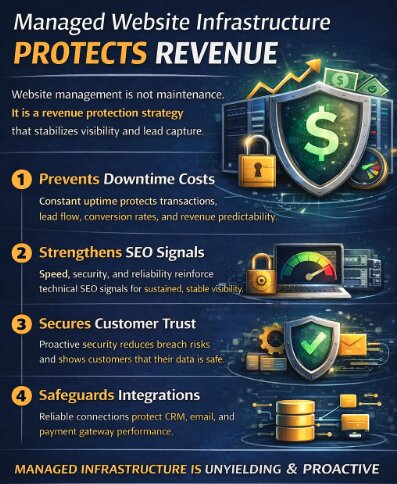
Most companies think of website management as maintenance.
Updates. Plugins. Hosting. Security patches.
Background work.
But your website is not a brochure. It is the intake layer of your revenue engine.
If that layer fails, revenue leaks.
Managed website infrastructure is not about convenience. It is about protection.
Revenue protection through managed infrastructure
Your Website Is the Front Door to Revenue
Every marketing initiative feeds into one place.
Organic search.
Paid traffic.
Social.
Email.
Direct referrals.
They all land on your website.
If that environment is unstable, slow, insecure, or poorly maintained, marketing performance degrades immediately.
You can have strong visibility and high intent traffic, but if your infrastructure cannot support it, revenue suffers.
Infrastructure is not optional. It is foundational.
The Hidden Cost of Downtime
Downtime is not always dramatic.
Sometimes it is intermittent.
Sometimes it is slow page load during peak hours.
Sometimes it is a form that silently stops working.
These issues rarely trigger alarms inside leadership meetings. They simply reduce conversion rates and introduce unpredictability.
When uptime is inconsistent, growth becomes volatile.
Managed infrastructure exists to eliminate that volatility.
Slow Sites Suppress Visibility
Search engines prioritize technical health.
AI systems favor clarity and speed.
If your site is slow, overloaded with unnecessary scripts, or poorly optimized, crawl efficiency declines. Interpretation becomes harder. Rankings fluctuate.
Technical performance is part of your visibility system.
Managed hosting, performance monitoring, and ongoing optimization ensure that your visibility engine is not undermined by technical friction.
Security Is a Trust Signal
Security breaches do not only damage data. They damage trust.
Compromised sites get flagged. Search visibility can drop. Users hesitate to submit information.
Revenue loss is not always immediate, but trust erosion compounds.
A managed infrastructure approach includes monitoring, proactive patching, secure configurations, and controlled environments that reduce risk before it becomes public.
Broken Integrations Break Revenue
Your website rarely operates alone.
It connects to:
CRM systems
Email automation
Scheduling platforms
Payment gateways
Analytics tools
If integrations fail, leads disappear into silence.
Managed infrastructure includes testing and monitoring of these connections so your lead capture and routing systems remain intact.
Managed website infrastructure includes hosting, updates, security, performance optimization, monitoring, and integration oversight handled proactively by a dedicated provider. It ensures your website remains stable, secure, and optimized without reactive firefighting.
Your website is the intake point for inbound traffic. If it is slow, unstable, or insecure, conversion rates drop and leads may be lost. Infrastructure stability directly supports lead capture and revenue protection.
How does website downtime impact business performance?
Downtime reduces trust, suppresses conversions, interrupts lead flow, and can harm search visibility. Even short outages during peak traffic periods can create measurable revenue loss.
Yes. Search engines and AI systems evaluate technical performance. Slow load times reduce crawl efficiency and user engagement, both of which impact rankings and discoverability.
Unmanaged WordPress environments can face plugin conflicts, security vulnerabilities, performance bottlenecks, and hosting instability. A managed platform reduces those risks through proactive monitoring and updates.
Security issues damage credibility and may reduce visibility in search results. Customers are less likely to submit information to a site that appears compromised or unstable.
When CRM, email, or payment integrations break, leads and transactions may be lost without immediate detection. Managed infrastructure includes integration oversight to protect revenue flow.
Is website infrastructure different from web design?
Yes. Design focuses on visual presentation and user experience. Infrastructure focuses on performance, stability, security, and integration reliability that protect revenue behind the scenes.
What is the difference between hosting and managed website infrastructure?
Basic hosting provides server space. Managed infrastructure includes proactive updates, security hardening, performance monitoring, integration testing, and technical oversight that go far beyond simple hosting.
How do I choose the right managed website platform?
Look for providers that combine hosting, updates, security, performance optimization, and strategic oversight under one predictable structure. The goal is stability, not complexity.
Hire the team to help you with your website, app, or other marketing needs.
We have a team of digital marketers who can help plan and bring to life all your digital marketing strategies. They can help with social media marketing, email marketing, and digital advertising!



Comments