
 https://www.omahamediagroup.com/images/uploads/monster_gallery/Omaha-Media-Group-Black.jpg
admin
https://www.omahamediagroup.com/images/uploads/monster_gallery/Omaha-Media-Group-Black.jpg
admin
Examples of Ad Creatives That Drive Real Campaign Results
TL;DR:
- Ad creative is now a crucial signal used by platform algorithms to determine ad reach and cost. Building a systematic pipeline with diverse, iterated creatives and aligned messaging drives scalable campaign performance in 2026. Treat creative as a continuous system, not a one-time deliverable, to sustain results and avoid burnout.
Ad creative is no longer just the visual layer of your campaign. It is the primary signal that platform algorithms like Meta’s Andromeda and TikTok’s discovery engine use to decide who sees your ads and at what cost. In 2026, only 6% of ads drive the majority of campaign performance, which means the examples of ad creatives you choose to test, iterate, and scale directly determine your return. This article gives you a concrete, operational framework backed by current benchmarks and real campaign behavior.
Table of Contents
- Key takeaways
- 1. What makes examples of ad creatives effective in 2026
- 2. Creative ad examples by format type
- 3. Hooks, angles, and proof elements that move the needle
- 4. Ad creative format comparison: strengths and best use cases
- 5. How to build a scalable ad creative pipeline
- My honest take on where most creative strategies break down
- Scale your ad creative system with Monstrousmediagroup
- FAQ
Key takeaways
| Point | Details |
|---|---|
| Creative volume drives scale | Producing 30+ creatives per month scales brands 3x faster than producing fewer than 10. |
| Format diversity outperforms volume alone | Meaningful differences in hooks, formats, and angles are required to avoid performance plateaus. |
| Captions and logos lift conversions | Closed captions boost conversions by 8.2% and logo-featured image ads convert at 108% higher rates. |
| Iteration beats constant resets | A 70/30 iteration-to-exploration spend split creates compounding performance gains over time. |
| Treat creative as a system | Hooks, claims, proof, CTA, and destination must align as one unified system, not isolated assets. |
1. What makes examples of ad creatives effective in 2026
Before you can learn from strong creative ad examples, you need a clear standard for evaluating them. Platform dynamics have shifted the criteria considerably in the last two years.
The single most important principle is one message per creative. One hook. One claim. One proof point. One CTA. Ads that try to communicate three benefits in 15 seconds confuse the algorithm and the viewer simultaneously. Your job is to make one idea undeniable, not to deliver a product catalog.
Format is no longer a preference. Vertical video with closed captions is a baseline requirement. Video ads with captions achieve 8.2% higher average conversion rates because most mobile users watch with sound off. Ignoring captions in 2026 is leaving conversions on the table.
The CTA-to-landing page match matters more than most marketers realize. If your ad says “Get 30% off today” and the landing page headline reads “Welcome to our store,” you have broken the promise. The friction that creates is measurable in bounce rates and lost revenue.
Pro Tip: Before launching any creative, run the “verbatim test.” Read your ad CTA out loud, then read the first line of your landing page. If they do not match closely enough for a stranger to recognize the connection in under two seconds, rewrite one of them.
Additional evaluation criteria worth applying to every creative review:
- Does the hook trigger a stop within 1.5 seconds?
- Is the format matched to the placement (4:5 for mobile feed, 9:16 for Stories and Reels)?
- Does the creative feel native to the feed or does it look like an ad?
- Is there a single clear next step visible without scrolling?
Volume without diversity is a common trap. Producing 30 variations of the same concept does not create 30 distinct learning signals. Meaningful differentiation across hooks, formats, and angles is what generates compounding performance data.
2. Creative ad examples by format type
Understanding format options is how you build a creative mix that sustains performance over time. Each format carries a different risk and reward profile.
Branded studio-shot ads produce a premium aesthetic that reinforces brand equity in high-consideration categories like luxury goods, B2B software, and financial services. The tradeoff is cost and native fit. On a casual social feed, a highly polished studio ad can look out of place and trigger the mental skip reflex before a viewer consciously decides to skip it.
UGC-style videos perform consistently well for direct-to-consumer brands because they carry social credibility. A real person speaking to camera about a product, without production polish, tends to stop the scroll better than a produced spot. The risk is creative fatigue. UGC concepts exhaust quickly, so your refresh cadence needs to be faster.
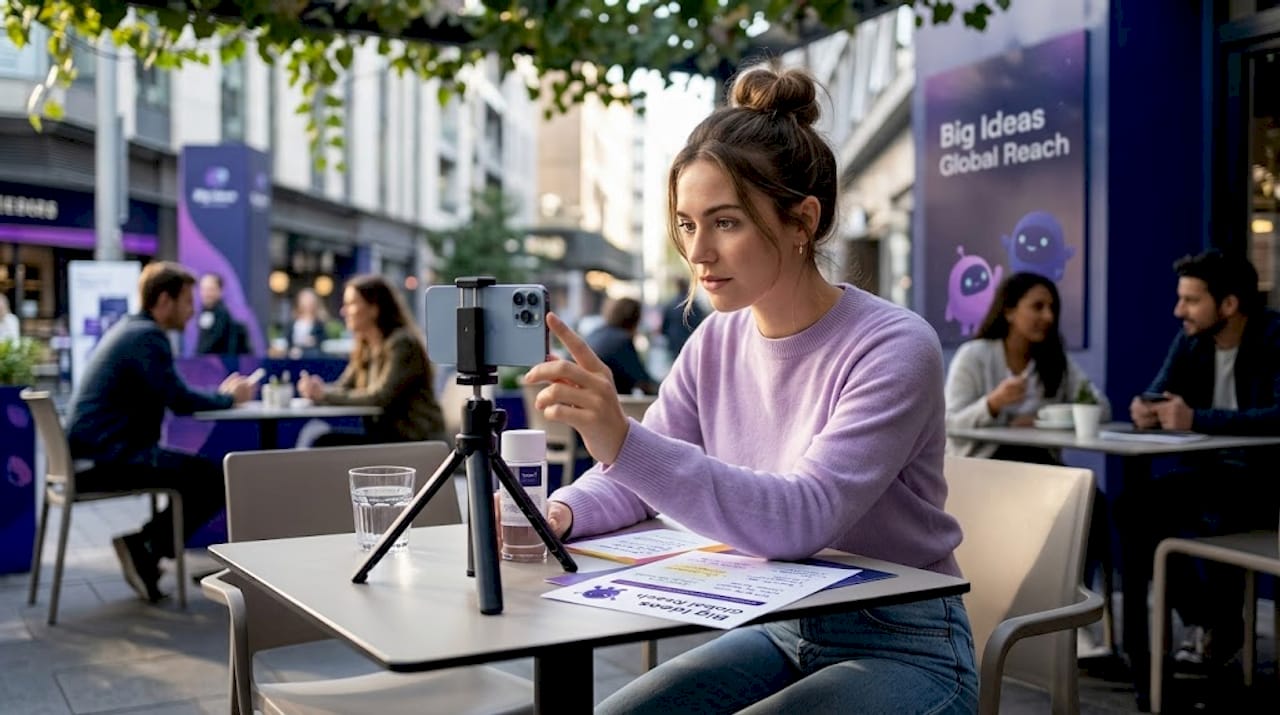
Hybrid creatives blend UGC-style footage with branded lower-thirds, logo placement, and clean CTAs. According to ad creative benchmarks, hybrid formats outperform both pure UGC and pure branded ads for advertisers spending above $30,000 per month. They balance authenticity with brand recall.
Static image ads with simple, bold value propositions remain underused and underestimated. Image ads featuring logos in the top-left or lower-right position saw 108% higher conversion rates. A well-designed static with a clear before/after visual, a strong headline, and a visible logo can outperform video in certain placements.
Carousel ads work best when you have a sequential story to tell. A skincare brand showing a five-step routine across five cards, or a SaaS company walking through a product workflow one screen at a time, uses the format as intended. Carousels used just to show multiple product photos without narrative logic tend to underperform.
Meme-format ads carry cultural relevance but require timing and audience fit. A meme ad that lands for a 25-to-34-year-old gaming audience will fall completely flat for a 50-plus professional segment. Use meme formats when you have strong audience signal and a creative team that actually understands the cultural context.
Pro Tip: Test your static image creative before investing in video production for the same concept. If the static does not convert, the video version of the same idea almost never rescues it. Validate the message first, then invest in production.
3. Hooks, angles, and proof elements that move the needle
The structure of a creative message determines whether a viewer engages or scrolls. Looking at successful ad designs across multiple verticals, certain patterns repeat.
Emotional storytelling consistently outperforms feature itemization. Spotify’s billboard campaign, which put a physical reaction on a billboard and let the viewer’s body interpret the emotion, generated attention precisely because it skipped the feature list and went straight to feeling. The lesson for performance marketers: lead with the outcome your customer experiences, not the mechanism that produces it.
Urgency-focused overlay text lifts click-through rates, but generic urgency does not. “Limited time offer” is invisible. “72 hours left: founding member price” creates real scarcity because it is specific.
“Ads that violate the register of the feed they appear in consistently underperform. Overly formal copy in a casual social environment creates distance, not trust.” — Reddit’s 2026 ad creative study
Natural, conversational headline tone matters on feed-native platforms. A Reddit ad that reads like a press release will not convert. A headline that sounds like something a peer would say in a thread outperforms corporate copy in that environment almost every time.
Products shown in context rather than isolated on a white background generate stronger purchase intent. A coffee maker photographed in a real kitchen with morning light converts better than the same product on a gradient background. Context creates desire by helping viewers imagine ownership.
Video hooks must deliver the core idea within the first 1.5 seconds. This is not a creative choice. It is a mechanical requirement. Shorter videos under 6 seconds had the highest conversion impacts in 2026 platform studies, and the 4:5 aspect ratio outperformed both square and widescreen formats for mobile feed placements.
Strong proof elements in successful ad designs include:
- Before/after visuals with specific, measurable outcomes (not vague improvements)
- Testimonials with a specific result and a recognizable identity (name, photo, profession)
- Third-party validation such as press mentions, certifications, or awards
- Social proof counters (“47,000 customers served this month”) that update in real time when possible
4. Ad creative format comparison: strengths and best use cases
| Format | Strengths | Weaknesses | Best use case |
|---|---|---|---|
| Branded studio | Premium feel, brand consistency | High cost, low native fit | Luxury, B2B, high-consideration products |
| UGC-style video | High stop rate, authenticity | Fatigues quickly, quality variance | DTC, e-commerce, impulse purchases |
| Hybrid | Balance of trust and recall | More complex to produce | Mid-to-large spend accounts ($30k+/month) |
| Static image | Fast production, logo lift | Limited storytelling depth | Retargeting, promotional offers |
| Carousel | Sequential storytelling | Lower reach on some platforms | Product demos, multi-step education |
| Meme format | Cultural relevance, low cost | Audience-specific, short shelf life | Young demographic, trend-aware brands |
5. How to build a scalable ad creative pipeline
Knowing the examples is only half the work. The other half is building the system that produces and tests them consistently. This is where most marketing teams fall short. They produce strong creatives in bursts, then stall when performance drops.
The foundation is a “winners library.” Every hook, visual style, and claim that outperforms your account baseline gets documented with its performance data. This library becomes your iteration input. You are not starting from blank each cycle. You are running variations on what is already proven.
The 70/30 iteration-to-exploration split is the operating model that creates compounding results rather than constant resets. Seventy to eighty percent of your creative spend goes toward iterating proven winners, with new angles, updated visuals, or different hooks on the same core message. The remaining twenty to thirty percent explores genuinely new concepts, formats, or audience framings.
Volume benchmarks by spend tier, drawn from 2026 DTC creative benchmarks:
- Starter (under $5k/month ad spend): Test 3 to 5 new creatives per week. Prioritize concept diversity over production quality.
- Growth ($5k to $30k/month): Test 8 to 15 new creatives per week. Begin building a winners library and document hook performance separately from visual performance.
- Scale ($30k/month and above): Test 20 to 30 or more weekly. Promote winners within 48 hours. Cut fatiguing ads within 72 to 96 hours of performance decline.
TikTok advertisers producing 200+ assets monthly avoid creative fatigue and reduce CPMs by up to 37%. That volume is not realistic for most teams without a system. AI-assisted tagging, brief templatization, and modular creative structures (swap the hook, keep the body) make that output achievable without proportional headcount increases.
Pro Tip: Build a modular creative structure where hooks, middle content, and CTAs are interchangeable components. A library of 10 hooks times 5 middle segments times 4 CTAs gives you 200 theoretical combinations from a fraction of the production work.
Avoid moving away from manual A/B testing as a reactive process. Systematized creative iteration where you are running structured experiments with clear hypotheses generates learning you can apply across campaigns. Random testing generates noise. Structured testing generates insight.
Internal creative reviews tied to your advertising trends calendar help you stay ahead of platform changes and audience shifts. Teams that connect creative production to broader campaign performance frameworks outperform those operating creatives as a standalone function.
My honest take on where most creative strategies break down
I have reviewed hundreds of ad creative setups across different industries and budget levels. The single most consistent failure pattern is not bad creative. It is treating creative as a deliverable instead of a system.
A team produces a great UGC video, it runs for three weeks, performance drops, and then everyone scrambles to figure out what went wrong. The real answer is that no refresh pipeline existed. The creative worked exactly as expected. The system around it did not.
The other pattern I keep seeing is the feature list ad. Marketers who are close to their product naturally want to communicate everything it does. Viewers do not want that. They want to know what their life looks like after they buy. The authentic emotional storytelling that wins attention is not warm and fuzzy. It is precise. It identifies a specific feeling and makes the product the path to it.
I am also skeptical of the current trend toward fully AI-generated ad content at scale. Volume produced without genuine creative judgment tends to be volume that performs like noise. The top 2% of ad creatives capturing 43% to 53% of ad spend did not get there through automated output. They got there because someone made a precise decision about a hook, a claim, and a visual that connected with real human behavior. Volume supports the system. Judgment drives the winners.
Focus on building brand identity through creative content as infrastructure, not as a creative exercise. When your creative system is built correctly, scaling spend becomes a predictable outcome rather than a gamble.
— Vector
Scale your ad creative system with Monstrousmediagroup
Most ad performance problems are not creative problems. They are systems problems. Monstrousmediagroup builds the operational infrastructure behind high-performing campaigns, from creative asset strategy and audience targeting to full-funnel paid media management. If your campaigns are producing inconsistent results or your creative pipeline stalls every quarter, the issue is upstream from the ads themselves.
Monstrousmediagroup’s digital marketing services include scalable creative development frameworks, paid media systems, and performance reporting built around revenue outcomes. Complementary marketing automation and SEO infrastructure keep your full acquisition system working together, not in separate silos. If you are ready to build a creative pipeline that produces predictable results, the conversation starts at Monstrousmediagroup.
FAQ
What are the best formats for ad creatives in 2026?
Hybrid creatives blending UGC-style footage with branded elements outperform both pure UGC and branded ads for accounts spending above $30,000 per month. Shorter videos under 6 seconds and 4:5 aspect ratios consistently produce the strongest conversion rates on mobile feeds.
How many ad creatives should you test per week?
Starter budgets should test 3 to 5 creatives weekly, growth-stage accounts 8 to 15, and scale-level accounts 20 to 30 or more. Fatiguing ads should be cut within 72 to 96 hours of performance decline.
Why do captions matter in video ad creatives?
Most mobile users watch video with the sound off. Video ads with overlay text and closed captions achieve 8.2% higher average conversion rates because they communicate the core message regardless of sound environment.
What is the biggest mistake in ad creative strategy?
Treating creative as a one-time deliverable rather than a continuous system is the most costly mistake. Without a refresh pipeline and a winners library, even strong creatives burn out quickly with no structured learning to replace them.
How does logo placement affect ad creative performance?
Image ads featuring brand logos see 108% higher average conversion rates, with top-left and lower-right placement producing the strongest results. Logo visibility reinforces brand trust and helps viewers immediately contextualize the offer.
Recommended
Hire the team to help you with your website, app, or other marketing needs.
We have a team of digital marketers who can help plan and bring to life all your digital marketing strategies. They can help with social media marketing, email marketing, and digital advertising!
CONTACT US
Comments